

By John Lloyd, CEO, Fidelis Private Fund
If you’ve looked at your investment portfolio lately and felt a familiar knot in your stomach, you aren’t alone.
For decades, the golden rule of investing was simple: allocate 60% to stocks for growth and 40% to bonds for safety. The theory was that when stocks zigged, bonds would zag, creating a natural counterbalance that smoothed out volatility.
But in today’s complex economic environment—characterized by stubborn inflation and fluctuating interest rates—that old playbook is failing. We are increasingly seeing days where stocks and bonds drop in tandem. If both sides of your “balanced” portfolio are flashing red simultaneously, where is your safety net?
 For many accredited investors I speak with, the realization is dawning that they aren’t nearly as diversified as they thought they were. They might hold index funds containing thousands of different companies, but if all those companies are susceptible to the same market headwinds; that’s not true diversification; it’s just varied concentration.
The hidden risk in many portfolios today isn’t just market volatility; it’s the lack of uncorrelated alternatives.
Moving Beyond the Public Markets
True diversification means holding assets that don’t move in lockstep with the S&P 500 or the 10-year Treasury note. It means finding investments whose performance is driven by different fundamentals entirely.
This is where alternative investments come into play. Yet, “alternatives” is often used as a catch-all term for anything complex or highly speculative, like venture capital or cryptocurrency. While those have their place for some, they rarely offer the stability investors are craving right now.
For those entering the preservation phase of their wealth journey, the goal isn’t necessarily to hit another home run; it’s to ensure the nest egg is secure while still generating meaningful income.
The Stability of Real Estate Debt
 This brings us to a sector that has historically provided that missing ballast: private real estate lending.
It is crucial to distinguish between real estate equity and real estate debt. When you buy a rental property or invest in a REIT, you are in an equity position. You are participating in the potential upside, but you are also exposed to the first tier of risk if values fall.
When you invest in private debt, however, you are stepping into the shoes of the bank. A key distinction that needs to be made in the private debt alternative space is whether the fund itself is leveraged, which can pose significant risk to investors. Fidelis operates with low leverage; we will not exceed 20% leverage of the total capital.
At Fidelis, our philosophy is grounded in this distinction. We believe that in uncertain times, the priority must always be Capital Preservation. We achieve this not by betting on future property appreciation, but by securing short-term loans against tangible, high-value real estate. The distinction of the type of debt is also important: all our loans are short-term debt, less than two years, which significantly reduces interest rate risk for our investors.
By operating as a direct lender, we create a stream of consistent Fixed Income for our investors that is contractually obligated by the borrower, regardless of what the stock market did yesterday. Because our loans are secured by properties with significant equity cushions (meaning the loan amount is far less than the property value), there is a substantial buffer protecting investor principal even if the real estate market softens.
A Partnership Approach to Wealth
 Finding the right alternative investment isn’t just about the math; it’s about trust. The private fund world can sometimes feel opaque, which is why I believe this business must be radically Relationship-Driven and Highly Transparent.
As an investor, you should know exactly what you are invested in, why those specific loans were chosen, and how they are performing. You need a partner who sees your capital as an extension of their own stewardship duty, not just assets under management.
If you are looking at your portfolio and realizing that true diversification is missing, it might be time to look beyond traditional stocks and bonds.
If you’d like to explore how private real estate debt could provide a stable, non-correlated foundation for your specific portfolio needs, let’s have a conversation. The best way to start is just to reach out—I answer my own phone, and I’d love to hear your story. You can call our team or me, John Lloyd, directly at 760-258-4486, or simply send an email to jlloyd@fidelispf.com.
See Our Latest Performance Report
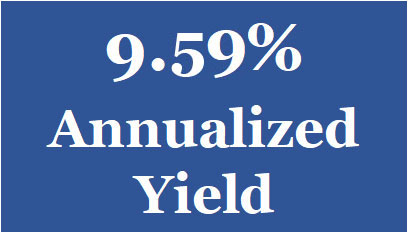 Fidelis Private Fund annualized yield paid to Limited Partners for the 4th Quarter 2025. Click here for a summary of Fidelis’s annualized yield since inception.
 Fidelis 2028 Vivid Vision – Where are we going and how are we going to get there!
The Fidelis 2028 Vivid Vision document provides a comprehensive blueprint of the company’s strategic direction, core values, and operational principles, highlighting its commitment to capital preservation, growth, innovation, and client-centric services. Click to read the Fidelis vision.