

Investors are increasingly seeking alternative avenues to bolster portfolio resilience. One compelling question emerging in wealth-building circles is whether private mortgage funds can deliver superior risk-adjusted returns compared to conventional bond portfolios. By focusing on short-duration, real estate–secured loans, private mortgage funds aim to provide a reliable income stream while preserving capital—potentially filling gaps left by public bonds in today’s dynamic markets. This exploration will unpack the comparative merits of mortgage fund investing and address how integrating this asset class can enhance both yield and stability for income-oriented investors.
The Problem with Traditional Strategies
 For decades, bonds have occupied a central role in diversified portfolios, prized for their income generation and principal protection. Yet in today’s environment, several challenges have surfaced:
- Compressed Yields: The historically low interest rate backdrop of the past decade has driven down bond yields, making it difficult to secure meaningful income without extending duration or credit risk.
- Interest Rate Sensitivity: Rising rate expectations introduce price volatility for longer-duration bonds, eroding total returns when rates tick upward.
- Credit Spread Risk: High‐yield bonds offer incremental yield, but with elevated default probabilities and greater correlations to equity markets during stress periods.
As investors strive for income levels that keep pace with inflation and retirement spending needs, these limitations prompt a re-examination of whether bonds alone can continue to serve as the bedrock of fixed-income allocations.
The Role of Private Mortgage Funds like Fidelis
Private mortgage funds pool investor capital to originate short-term, primarily first‑lien loans secured by real estate collateral. Their structure typically involves:
- Capital Aggregation: Investors contribute to a diversified loan portfolio, reducing idiosyncratic risk versus single-property lending.
- Underwriting Discipline: Loans are vetted based on after-improved value, loan-to-value ratios, borrower track record, and project feasibility.
- Active Servicing: Dedicated teams monitor collateral performance, manage loan maturities, and execute exit strategies—often through property sales or refinances.
By focusing on relatively short term loans —often six to eighteen months—these funds can rotate capital, capture prevailing spread opportunities, and limit interest rate exposure. Contractual interest payments drive returns and, in many cases, modest equity participation or origination fees, providing a multi-faceted yield profile.
Strategic Value Within a Portfolio
 Incorporating private mortgage funds into a diversified portfolio can confer several strategic benefits:
- Enhanced Income Potential: Targeted yields often exceed those available from investment-grade bonds, reflecting the illiquidity premium and real estate collateralization.
- Lower Duration Risk: Short loan terms minimize exposure to broad rate movements, helping stabilize net asset values when rates rise.
- Capital Preservation: Security on tangible assets provides downside protection; in stress scenarios, foreclosure and liquidation can recoup principal.
- Diversification Beyond Equities: Since private lending loans are underwritten on specific projects rather than corporate cash flows, their performance drivers differ from those of stocks and corporate debt.
When calibrated appropriately within a broader asset mix, mortgage funds can act as a ballast against equity drawdowns and a complement to traditional bond holdings.
Fidelis’s Distinctive Edge
Though the private lending space has grown more crowded, Fidelis Private Fund maintains a competitive edge through several hallmarks:
- Seasoned Underwriting Philosophy: Firmly rooted in common-sense assessments, Fidelis underwrites based on post-improvement appraisals, ensuring loan-to-value ratios align with true collateral worth.
- Alignment of Interests: Management and founder capital investments alongside investors foster shared objectives and disciplined risk management.
- Relationship‑Driven Execution: Long-standing partnerships with reputable borrowers and local real estate professionals yield proprietary deal flow and smoother loan closures.
- Transparent Reporting: Quarterly statements and detailed loan-by-loan disclosures afford investors a clear window into portfolio composition and performance drivers.
This combination of experienced stewardship, skin in the game, and open communication cultivates trust and consistent execution across diverse market cycles.
Smart Diversification Principles
 Selecting the most suitable mortgage fund investment requires scrutiny across several dimensions:
- Transparency & Governance: Seek funds with robust reporting frameworks, independent boards, and third-party valuations to validate asset quality.
- Loan-to-Value Adjustments: Favor conservative LTV thresholds—ideally below 65 % on after-improved valuation—to provide meaningful loss buffers.
- Portfolio Granularity: Funds with broad loan diversification (20+ assets across varied geographies) can mitigate concentration risk.
- Yield Consistency: Evaluate historical distribution track records, ensuring returns are driven by interest accrual rather than principal recoupment or asset sales.
- Redemption Provisions: Understand liquidity terms—lock-up periods, notice requirements, and gates—and align them with your cash flow needs.
By rigorously vetting these factors, investors can distinguish high‑quality mortgage fund offerings that align with their risk and return objectives.
Comparing Risk‑Adjusted Returns
A common benchmark for income investors is the Bloomberg U.S. Aggregate Bond Index, which currently yields in the low to mid 3 % range, with duration north of five years. Private mortgage funds, by contrast, often target net yields between 6 % and 9 %, depending on seniority, geography, and borrower credit. On a risk-adjusted basis—measured by Sharpe ratios or customized metrics accounting for duration and collateral security—the potential for mortgage funds to “beat” bonds lies in capturing the illiquidity and real estate premiums while capping downside through first-lien positions.
For example, when interest rates climb, traditional bond portfolios can suffer marked-to-market losses, whereas a short‑duration mortgage fund with fixed contractual coupons remains largely insulated, earning its higher yield without significant price swings. Even in mild real estate downturns, conservatively underwritten loans with healthy equity cushions can weather valuation dips more robustly than higher-risk credits.
Conclusion
As the yield landscape continues to evolve, investors must look beyond traditional bond allocations to protect purchasing power and meet income goals. Private mortgage funds present a compelling option—pairing attractive yields with strong collateral safeguards and limited interest rate sensitivity. With Fidelis Private Fund’s disciplined underwriting, aligned incentives, and transparent processes, this asset class can serve not as a fringe alternative, but as a core component of a modern, income-stable portfolio.
If you’re looking to strengthen your portfolio with consistent, asset-backed income, call Fidelis Private Fund at 760-258-4486. Let’s explore whether our approach is the right fit for your financial goals.
Explore how Fidelis can support your growth with flexible, fast financing solutions tailored to your needs.

See Our Latest Performance Report
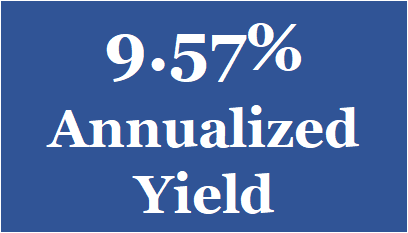 Fidelis Private Fund annualized yield paid to Limited Partners for the 1st Quarter 2025. Click here for a summary of Fidelis’s annualized yield since inception.
 Fidelis 2028 Vivid Vision – Where are we going and how are we going to get there!
The Fidelis 2028 Vivid Vision document provides a comprehensive blueprint of the company’s strategic direction, core values, and operational principles, highlighting its commitment to capital preservation, growth, innovation, and client-centric services. Click to read the Fidelis vision.