

When seeking private financing for real estate investments, borrowers often focus primarily on interest rates when comparing lenders. While rates certainly matter, they represent just one element in a complex equation that determines the actual cost and value of private financing. Understanding the full spectrum of loan terms helps investors make informed decisions that align with their project needs rather than simply chasing the lowest advertised rate.
Private lending offers flexibility and customization that conventional financing cannot match. This adaptability creates opportunities for strategic borrowers to negotiate terms that enhance their specific investment strategies. By understanding which terms matter most for different project types, investors can identify the financing structures that truly optimize their returns rather than those that appear attractive at first glance.
Beyond Interest Rates: The Complete Cost Picture
 Several factors beyond the nominal interest rate determine the actual financing cost:
- Origination fees typically range from 1-3% of the loan amount and significantly impact overall costs, particularly for shorter-term loans. A loan with a slightly higher interest rate but a lower origination fee is less expensive for projects with brief holding periods.
- Draw structure determines when and how funds become available, directly affecting interest costs. Loans that disburse funds only as needed for construction or renovation phases can substantially reduce interest expenses compared to those requiring full funding at closing.
- Prepayment penalties can dramatically alter the economics of projects that sell or refinance earlier than anticipated. Loans without prepayment penalties offer valuable flexibility to capitalize on favorable market conditions or unexpected opportunities.
Strategic Terms for Different Project Types
Different real estate strategies benefit from specific loan structures:
- Fix-and-flip projects require efficient draw schedules that align with renovation phases. The ideal structure provides acquisition funding immediately while releasing renovation funds as work progresses, minimizing interest costs while ensuring capital availability when needed.
- Buy-and-hold investments benefit from longer terms with clear extension options. These provisions create valuable flexibility if market conditions change or stabilization takes longer than anticipated, preventing forced sales or refinancing during unfavorable periods.
- Development projects need construction draws tailored to project phases with realistic timelines. The optimal structure includes sufficient contingency reserves and flexible completion deadlines that accommodate the inevitable delays in complex construction.
Critical Terms Often Overlooked
 Several important loan provisions frequently receive insufficient attention during initial comparisons:
- Extension options provide insurance against unforeseen delays or market changes. The availability, cost, and conditions of extensions can prove crucial if projects take longer than anticipated or if market conditions temporarily deteriorate.
- Default provisions and cure periods determine what happens when challenges arise. Loans with reasonable cure periods and workout-oriented default processes offer protection against minor issues escalating into catastrophic consequences.
- Relationship terms establish the foundation for future financing. Some lenders offer improved terms, higher loan limits, or expedited processing for repeat borrowers, creating significant long-term advantages beyond the initial transaction.
The Fidelis Private Fund Approach to Loan Terms
Fidelis Private Fund has developed a borrower-friendly approach to loan structuring that emphasizes relationship, transparency, and flexibility:
- We provide transparent, comprehensive term sheets that outline all costs and conditions upfront. This transparency eliminates the surprise fees and hidden requirements that sometimes emerge during closing with less forthright lenders.
- Our draw structures align with project realities rather than arbitrary formulas. We release funds for renovation and construction loans based on actual project needs and completion milestones, optimizing capital availability and interest costs.
- We offer relationship pricing that improves with demonstrated performance. As borrowers establish successful track records through completed projects, our terms become increasingly favorable, creating compelling advantages for ongoing financing relationships.
Evaluating Term Sheets Effectively
When comparing financing options, several analytical approaches help identify the most advantageous structure:
- Calculate the effective annual cost, including all fees, not just the stated interest rate. This comprehensive analysis often reveals that loans with slightly higher rates but lower fees prove less expensive overall, particularly for shorter-term projects.
- Model different timeline scenarios to understand how various loan structures perform under other circumstances. This stress testing helps identify which terms provide the most protection against delays or market changes.
- Consider the opportunity cost implications of different structures. Terms that maximize available capital or provide greater flexibility often create value beyond simple interest savings by enabling investors to pursue additional opportunities or optimize exit timing.
Negotiating Favorable Terms
Understanding which terms matter most creates leverage for effective negotiation:
- Prioritize terms based on your specific project needs rather than attempting to optimize every provision. Focusing negotiation efforts on the elements most critical to your particular strategy increases the likelihood of meaningful concessions.
- Demonstrate credibility through thorough preparation and professional presentation. Lenders typically offer their best terms to borrowers who demonstrate capability and reliability through comprehensive loan packages and clear communication.
- Leverage competition strategically by obtaining multiple term sheets when possible. Having alternatives creates negotiating leverage while providing valuable market intelligence about prevailing terms and conditions.
Making the Final Decision
 The optimal financing choice integrates multiple considerations beyond simple cost comparison:
- Reliability and execution matter as much as terms, particularly for time-sensitive opportunities. A slightly more expensive lender with proven closing capability often represents a better choice than a marginally cheaper option with uncertain execution.
- Relationship potential should factor into decisions, especially for investors planning multiple projects. Initial terms matter, but the potential for improved financing on future opportunities often creates more excellent long-term value.
- The final selection should be guided by alignment with the investment strategy. The best financing structure complements your approach rather than forcing adaptation to standardized loan parameters.
Consider how different loan terms might impact your strategy and project economics for your next real estate investment. Contact Fidelis Private Fund today at 760-258-4486 to discuss how our flexible, transparent loan structures can be tailored to enhance your particular investment approach.
Explore how Fidelis can support your growth with flexible, fast financing solutions tailored to your needs.
See Our Latest Performance Report
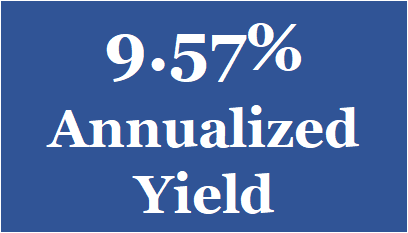 Fidelis Private Fund annualized yield paid to Limited Partners for the 1st Quarter 2025. Click here for a summary of Fidelis’s annualized yield since inception.
 Fidelis 2028 Vivid Vision – Where are we going and how are we going to get there!
The Fidelis 2028 Vivid Vision document provides a comprehensive blueprint of the company’s strategic direction, core values, and operational principles, highlighting its commitment to capital preservation, growth, innovation, and client-centric services. Click to read the Fidelis vision.