

When I talk with new investors, this question often comes up, usually in plainer words than the brochure uses: “John, how have you been able to deliver such competitive returns consistently for all these years? What’s the catch?”
Here is the direct answer. There is no catch, but there is risk. Every investment carries it. Anyone who tells you otherwise is either careless or selling something.
We do not hide from risk. We structure against it. Here are the risks that matter most and what we do about each one.
Risk One: The Borrower Stops Paying
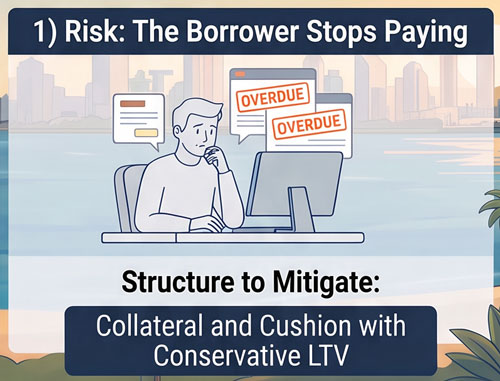 Borrowers miss payments. That is the business we are in. Our answer is collateral and cushion.
Every loan is secured by real property, and in most cases we hold first position on the deed of trust. Our published loan-to-value ceilings are 60 to 65 percent for commercial and 65 to 75 percent for residential investment property. Across the loans we hold today, the weighted average is below 60 percent, well inside our own ceiling. That gap is equity the borrower has at stake before we do.
Now consider the worst case: every borrower stops paying at once. We would foreclose, and the fund would end up owning the real estate behind those loans. Most of that property is in San Diego. So in that extreme scenario, our investors, through the fund, would own a portfolio of real property in one of the most supply-constrained markets in the country, acquired at well below what the borrowers paid.
That is the difference between lending against hard assets and owning paper. A stock can go to zero. A building on a San Diego lot does not disappear. It may take time to sell, and its value moves with the market, but it is still there, and it still has value.
Risk Two: Values Fall
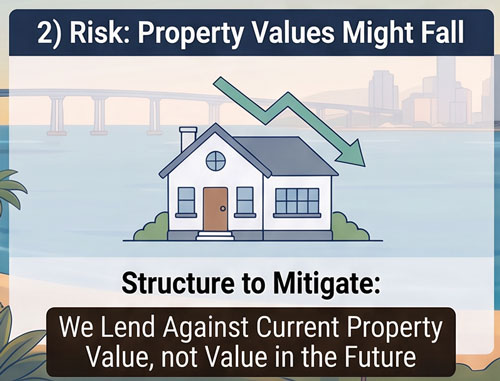 A broad decline in values shrinks the cushion I just described. So we do not lend against what a property might sell for after an optimistic exit. We lend against what it is worth today, and the borrower’s equity takes the first hit if values drop.
We also keep a loan loss reserve of more than 2 percent of total loan commitments. It is set aside for exactly this kind of situation, so a single problem loan does not become a problem for our investors.
This is not theory for us. From 2009 to 2011, during the worst real estate downturn in modern memory, our current Fidelis Fund Manager ran a private mortgage fund prior to Fidelis. That fund never lost investor capital, and its annualized return never fell below 6 percent, even at the bottom of the recession. Markets always come back. We’ve managed through the worst downturn before, and we built Fidelis on what we learned, in case we ever face that situation again.
Risk Three: Construction Projects Run Into Trouble
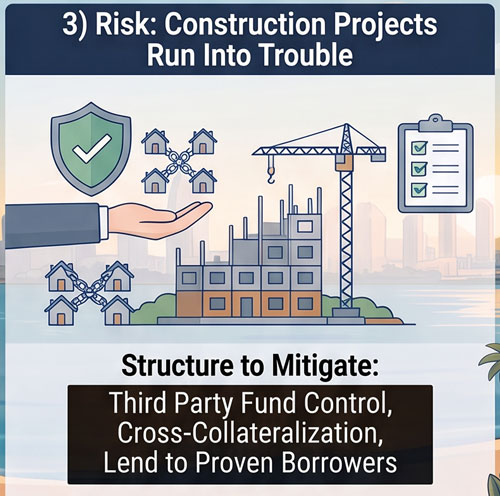 We do fund construction loans. Projects sometimes go over budget, contractors fall behind, and permits stall. A half-finished building is worth less than a finished one.
We control how construction money goes out. We often use third-party fund control, which means draws are released only after the work they pay for is verified.
We also look past the project itself. Most of our borrowers have other sources of cash flow, such as rental income, other businesses, or other projects, that they can draw on to cover a shortfall if costs run high or a timeline slips. And we often cross-collateralize, securing a loan with one or more additional properties besides the project. That adds equity behind our loan and gives us more than one property to recover from if we need it.
The most important protection, though, is who we lend to. Most of our loans go to repeat borrowers: builders and investors we have worked with before and watched perform. We value those relationships. A borrower with a track record, other resources to lean on, and a reputation to protect with us is the best way to reduce construction risk.
Risk Four: Second-Position Loans
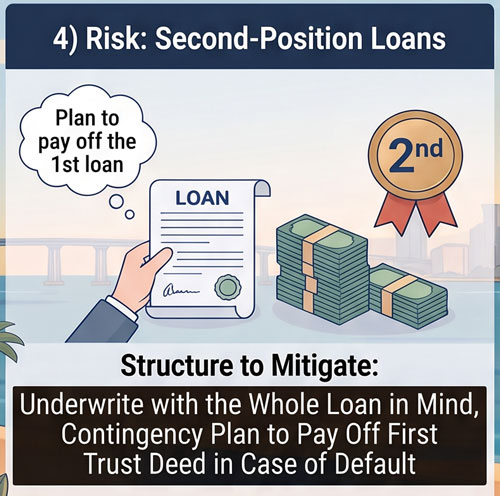 Most of our loans are in first position. When we do make a second trust deed loan, we know we stand behind another lender, so we underwrite it as if we were making the whole loan. We combine the first and second and evaluate them as one first trust deed loan, with the same standards for leverage and collateral.
We also make second-position loans only when the first loan ahead of us is small enough that we could pay it off ourselves if needed. If the borrower defaults on the first, we can step in and protect our position instead of being at the mercy of the senior lender.
Risk Five: The Borrower Can’t Get Out at Maturity
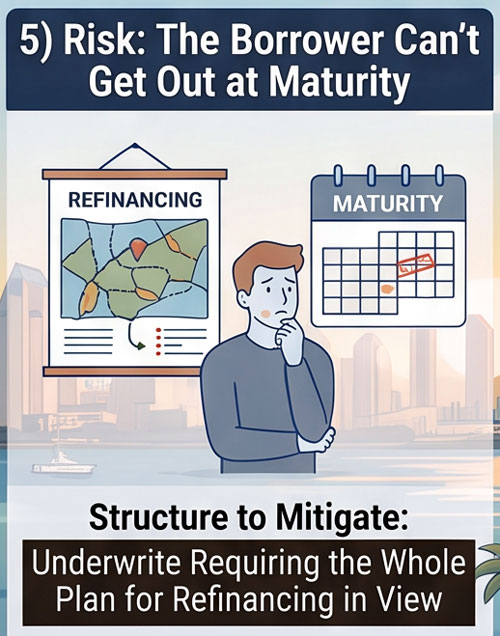 Our loans are short-term, less than two years. At maturity, the borrower has to refinance or sell. If rates have risen or the market has softened, that exit can get harder.
That is why the exit is the first thing we underwrite, not the last. Before we decide how much to lend, we work out how we will be repaid: who refinances this loan, what the property sells for, and on what timeline. Then we work backward to size the loan. If the exit doesn’t hold up, the loan doesn’t get made.
.
Risk Six: Fund-Level Leverage
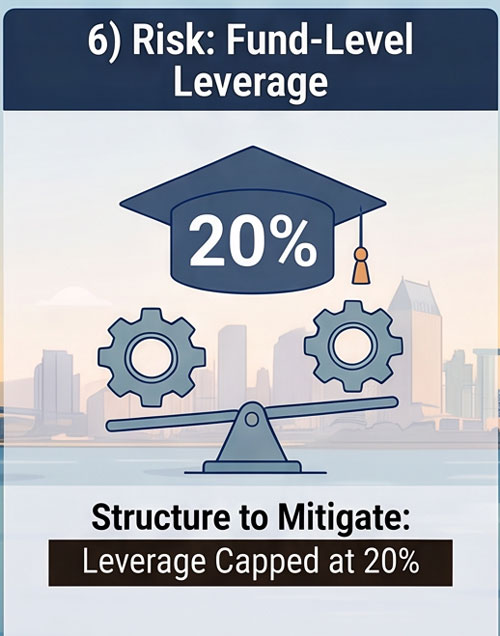 Some funds borrow heavily to boost returns, which magnifies losses as easily as gains. We don’t.
Any leverage at the fund level is capped at 20 percent of capital and usually runs closer to 10 percent. We use it only to manage cash flow and to provide liquidity when investors need it, never to stretch for yield.
.
Risk Seven: Liquidity
This is the one people underestimate, so let me be specific rather than reassuring.
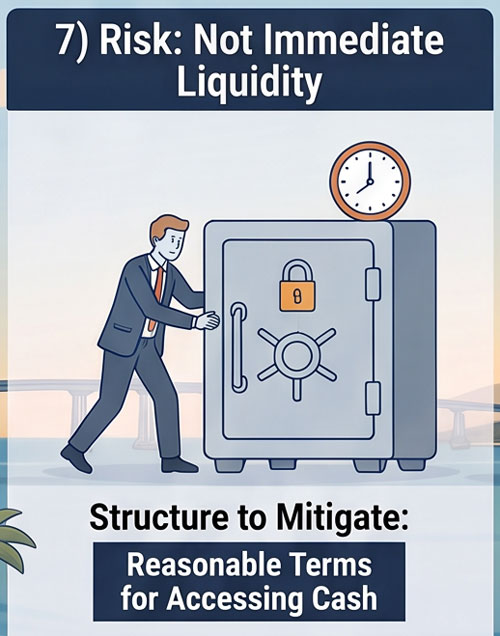 Fidelis is not a savings account. The minimum investment is $50,000. There is a one-year lock-up, and withdrawing early carries a 10 percent penalty. After that, a redemption requires 45 days’ written notice before the end of a calendar quarter, and funds are typically disbursed by the 10th of the month after quarter-end. When the fund has liquidity available, we have often been able to process redemptions much faster, but you should plan around the stated terms.
Your return compounds monthly. You choose how to take distributions: quarterly, semi-annually, or yearly. Or you can leave your capital alone and let it keep compounding. We do not mail a check every month.
If you might need this capital on thirty days’ notice, this is the wrong investment for you, and I would rather you hear it from me now.
 The Bottom Line
We trade the chance at a spectacular year for a structure built to produce competitive, steady, dull income. Real property secures it, in-house underwriting supports it, and independent firms service it.
That structure has delivered a consistent, competitive return. The fund has returned more than 9 percent in each of the last couple of years and has never returned less than 8 percent annualized since inception.
Fixed income strategies should be boring. We built ours that way on purpose.
Let’s Talk
If any of this still feels unfamiliar, call me. I answer my own phone. The best partnerships start with a simple conversation: no pressure, just clarity. Reach me at 760-258-4486 or jlloyd@fidelispf.com.
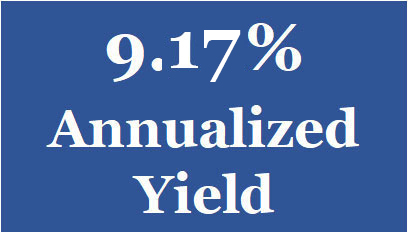 Fidelis Private Fund annualized yield paid to Limited Partners for the 3rd Quarter 2026. Click here for a summary of Fidelis’s annualized yield since inception.