

For investors evaluating mortgage fund opportunities, understanding the distinction between first lien and second lien positions represents a critical component of risk assessment. While both investment types provide exposure to real estate-secured loans, their risk-return profiles differ significantly due to their positions in the capital stack. This fundamental difference influences everything from default risk and recovery prospects to appropriate yield expectations and portfolio allocation strategies.
The lien position determines the priority of claims against a property in the event of default or foreclosure. This legal standing creates a clear hierarchy that directly impacts investor security and potential outcomes during challenging situations. By understanding these differences, investors can make more informed decisions about which mortgage investment types align with their specific risk tolerance and return objectives.
The Fundamental Distinction: Priority of Claims
The capital stack position represents the most significant difference between first and second liens:
- First lien mortgages occupy the senior position in the capital stack, giving them priority claims against the property in foreclosure situations. First lien holders must be paid in full before junior lienholders receive any proceeds from property liquidation.
- Second lien mortgages occupy subordinate positions, receiving proceeds only after first lien obligations have been completely satisfied. This junior status creates fundamentally different risk profiles even when secured by the same property.
- Foreclosure rights also differ significantly, with first lien holders typically controlling the foreclosure process while second lien holders have more limited options. This control difference creates practical advantages for first lien positions during workout situations.
The Fidelis Private Fund Approach to Lien Position Management
Fidelis Private Fund has developed a strategic approach to lien position selection that emphasizes both prudence AND opportunity.
We focus primarily on first lien positions to provide maximum security for investor capital. This emphasis ensures our loans maintain priority claims against collateral properties, creating the strongest possible protection against potential value fluctuations.
However, in today’s market many borrowers hold existing first mortgages at historically low interest rates (sometimes as low as 2.50%). When these borrowers seek funds for value-added improvements—such as constructing additional units or enhancing existing structures—it is often impractical to refinance their low-cost first lien. In such cases, Fidelis may strategically provide a 2nd Trust Deed loan, allowing borrowers to preserve their favorable financing while still accessing capital.
What sets Fidelis apart is our disciplined underwriting for 2nd Trust Deeds
 Limiting 1st Trust Deed Size – We maintain a policy of limiting the outstanding balance of any 1st Trust Deed to less than $2 million. This ensures that in the unlikely event of a 1st lien default, our fund has sufficient liquidity to cure the 1st and protect our position.
 - Combined LTV Underwriting – We underwrite every 2nd Trust Deed as if it were a 1st, by analyzing the combined loan-to-value (CLTV) of both liens. This conservative approach is reflected in our portfolio’s average LTV, which has consistently remained below 60%.
- Proven Strategy and Experience – During the Great Recession, our team implemented these very safeguards in managing another fund and achieved zero investor capital losses, even through market stress.
This strategy balances borrower needs with investor security. Importantly, if Fidelis required borrowers to refinance into a single first lien, the risk position (based on CLTV) would remain the same. By structuring loans in the 2nd position, we maintain conservative risk while also enhancing yields for investors, since second liens command higher rates.
Risk Profile Differences: What Investors Should Understand
Several specific factors create risk differentials between lien positions:
- Equity cushion protection varies dramatically between positions. First liens typically have 25-40% equity cushions before facing principal risk, while second liens often have thinner margins when considering combined LTV. Fidelis mitigates this by applying strict CLTV analysis.
- Recovery rates in defaults historically favor first liens (85-95% recovery), but disciplined underwriting allows second liens to be structured prudently without undue risk.
- Control mechanisms differ, as first lien holders initiate foreclosure. Fidelis offsets this limitation in second liens by ensuring the 1st lien is manageable in size, giving us the ability to step in if needed.
Yield Considerations Across Lien Positions
Return expectations should align with the fundamental risk differences:
- Second liens generally provide a 2–3% yield premium over first liens, reflecting their subordinate status.
- At Fidelis, this yield enhancement is captured without adding disproportionate risk because of our conservative underwriting approach.
- While workouts for second liens can require more time and resources, our size limits and CLTV discipline reduce these challenges.
Portfolio Construction: Balancing Lien Positions
 Strategic allocation decisions regarding lien positions influence overall portfolio characteristics:
- Core-satellite approaches often use first liens as a portfolio foundation, with carefully sized second lien exposure for yield enhancement.
- Risk budgeting accounts for higher volatility in second liens, ensuring stability even if subordinate loans face challenges.
- Diversification across lien types may improve overall portfolio efficiency when second liens are structured with strong safeguards, as Fidelis employs.
Market Conditions and Lien Position Selection
Economic conditions influence lien attractiveness:
- Late-cycle markets favor first liens for stability, though well-structured second liens can still provide opportunity.
- Distressed environments may create unique openings in both lien categories, with second liens offering asymmetric returns for those positioned prudently.
- Interest rate environments often impact second liens more, but with Fidelis’s underwriting, we reduce volatility exposure by keeping CLTV conservative.
Due Diligence Considerations Across Lien Types
Evaluation must adjust by lien position:
- Combined LTV analysis is critical for second liens. At Fidelis, we always include CLTV in our portfolio averages, giving investors a true picture of risk.
- First lien terms can impact second lien risk, requiring careful review of senior loan maturity, prepayment provisions, and default terms.
- Legal documentation matters more in second liens, and Fidelis thoroughly reviews intercreditor agreements and protections to safeguard investor capital.
The Long-Term Perspective on Lien Position Selection
 While short-term yield differences draw attention, long-term investment success is rooted in disciplined management:
- Through-cycle performance favors first liens for consistency, but Fidelis’s approach has proven that second liens—when underwritten conservatively—can perform safely as well.
- Compounding advantages from avoiding losses outweigh incremental yield. Our underwriting constraints are designed with this principle in mind.
- Peace of mind comes from knowing capital is protected. Fidelis structures every second lien with common-sense constraints that minimize disruption for investors.
Final Thoughts
For investors seeking stable income with strong capital preservation, Fidelis Private Fund offers a professionally managed mortgage fund with a strategic approach to lien position selection. By focusing primarily on first liens while selectively and prudently underwriting second liens, Fidelis delivers enhanced yields without taking unnecessary risks.
Contact us today at 760-258-4486 to learn more about our investment approach and current opportunities.
Explore how Fidelis can support your growth with flexible, fast financing solutions tailored to your needs.

See Our Latest Performance Report
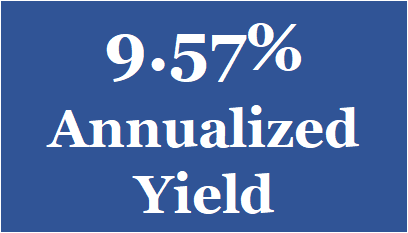 Fidelis Private Fund annualized yield paid to Limited Partners for the 1st Quarter 2025. Click here for a summary of Fidelis’s annualized yield since inception.
 Fidelis 2028 Vivid Vision – Where are we going and how are we going to get there!
The Fidelis 2028 Vivid Vision document provides a comprehensive blueprint of the company’s strategic direction, core values, and operational principles, highlighting its commitment to capital preservation, growth, innovation, and client-centric services. Click to read the Fidelis vision.