

When I sit down with a new investor, one question often comes up. Sometimes it is asked directly, and sometimes it sits between the lines: Who is actually managing my money, and what have they done with other people’s money in the past?
It is the right question. I would argue it is the most important question you can ask any fund manager. Before the yield, before the terms, before the subscription documents, you should know who is making the decisions and how they have performed when it counted.
So here is my direct answer. In this business, trust is not assumed. It is earned, and then it should be verified. Below are the parts of our record you can check for yourself, not the parts you would have to take on faith.
Who Is Managing the Money
 I have led Fidelis Private Fund for more than seven years. Before Fidelis, I managed a mortgage fund through the Great Recession, the hardest real estate credit environment most of us will ever see. I learned more in those years about protecting capital than in any period before or since. Those lessons are built into how Fidelis underwrites today.
Every loan we make is originated and underwritten in-house, and I personally hold final credit approval. That means the credit decisions are ours, and nobody else’s to blame. I am supported by a dedicated team handling loan processing, investor relations and operations, and by an Advisory Board we meet with every quarter. I value their perspective because good judgment gets better when it is challenged.
We Have Our Own Money on the Line
Every investor should ask whether the owners have skin in the game. At Fidelis, the answer is yes. My general partners and I have more than $8 million of our own money invested in Fidelis Private Fund. We are not managing a product we sell to others. We manage our own capital in the same fund, right alongside yours.
That matters for one simple reason: alignment. If a loan goes wrong, we feel it in our own accounts before we ever have to explain it to anyone else. It changes how you underwrite late on a Friday afternoon, when a deal looks good on paper but something does not sit right. When your own money is in the fund, “probably fine” is not good enough.
We believe in this fund, and we have a vested interest in protecting this track record, not just for our investors, but for our own families. My advice to any investor, whether you invest with us or anyone else: ask the manager how much of their own money is in the fund. If the answer is vague, that is your answer.
 The Record, in Numbers
- Zero capital losses since inception. That is true not only for Fidelis, but for my historical track record managing a mortgage fund through the Great Recession, prior to Fidelis. In a business whose whole job is lending against real property and getting repaid, that is the answer that matters most.
- Conservative leverage. Our published loan-to-value ceilings are 60 to 65 percent for commercial loans and 65 to 75 percent for residential loans. The weighted average across the loans we hold today is under 60 percent. We are not lending at our ceiling. We are lending with margin.
- Consistent returns. For the third quarter of 2026, the fund returned 9.17 percent net annualized to investors, and we have never been below 8 percent annualized.
Loan-to-value deserves a moment, because it is the single best indicator of risk in private lending. When the average loan sits below 60 percent of the property’s value, more than 40 percent of that value is the borrower’s equity, and it sits in front of our investors’ capital. If a borrower runs into trouble, that equity cushion is what protects principal. It is the margin of safety, and it is the first thing I look at on every deal.
Those numbers are not a personality. They are facts, and they are the result of a habit repeated across many decisions.
What “Zero Losses” Does and Does Not Mean
I want to be straight with you about this. Zero capital losses does not mean every loan has gone exactly according to plan. Anyone who has been in this business long enough has seen a borrower pay late, a project run long, or an exit take longer than expected. Real estate is a real business with real people, and things happen.
What zero losses means is that when things did not go according to plan, the structure did its job. Conservative leverage, careful underwriting, and a team that picks up the phone early rather than late protected our investors’ principal. The measure of a lender is not whether problems ever happen. It is what happens next, and how it is handled.
And yes, past performance does not guarantee future results. I would rather say that plainly than have it buried in a footnote.
What a Track Record Does Not Show
The other half of a lending record is the loans you did not make, and that list never appears in a report. Every month we decline deals that pencil on paper and fail on judgment: an exit that only works if the market cooperates, a sponsor whose story does not hold together, a valuation leaning on a comparable that should not count.
Two principles guide those decisions at Fidelis:
Never let pressure to put money to work override sound underwriting fundamentals.
When the market gets uncertain, tighten your discipline, not your commitments.
Lending is not an algorithm or a science. It is an art, judgment applied one relationship at a time, by people who live with the outcome.

How We Underwrite
Every loan request is measured against the same core questions:
- The property. What is it worth today, supported by independent valuation, and how far below that value are we lending?
- The exit. How will we be repaid, and does that plan still work if the market does not cooperate?
- The borrower. Do they have the experience to execute, real equity in the deal, and a story that holds together when we check it? Most of our new borrower relationships come to us through referrals from trusted partners.
- The market. Do we know it? We lend primarily in Southern California, so most of our loans are in our own backyard. Where they are not, we rely on trusted local relationships.
If we cannot answer all four with confidence, we do not make the loan. That discipline is less exciting than growth for its own sake, but it is why the record looks the way it does.
The Structure Behind the Judgment
 Judgment needs guardrails. Here is the structure that surrounds every decision we make:
- A California limited partnership offered under Regulation D, Rule 506(c), available only to verified accredited investors.
- State licensed. Fidelis holds a California Finance Lenders license and is registered with NMLS.
- In-house origination and underwriting. The people who approve the loan are the people accountable for it.
- Independent loan servicing. Once a loan closes, an independent third-party servicer collects payments and handles balances and payoffs, so the money flows through a separate set of hands.
- An annual independent audit, quarterly investor statements, and quarterly Advisory Board meetings.
A record should not depend on everyone staying clever. It should hold because the structure makes carelessness hard.
How to Check It Yourself
I mean it when I say you should verify, not trust. Here is how:
- Look up our licenses. Search the California Department of Financial Protection and Innovation (DFPI) license lookup for Fidelis Private Fund, CFL license 60DBO-105717. Search NMLS Consumer Access for our company NMLS ID 2228491 and my individual NMLS ID 346875. My California real estate broker license, 01376920, is searchable on the California DRE website.
- Find our Form D on SEC EDGAR. Every Regulation D offering files one. It is public, and it is free to search.
- Ask for our audited financial statements. An independent audit is the outside check on everything we report.
- Ask to see the portfolio. We will walk you through our current loans by property type, location and loan-to-value, and show you how the weighted average is built.
- Talk to people who know us. Ask to speak with current investors, including those who have been with us the longest.
- Come see us. Our office is in San Diego. Sit across the table, ask the hard questions, and judge the people for yourself.
|
 Questions to Ask Any Private Fund Manager
Any manager worth your capital should welcome every one of these questions. We do.
The Bottom Line
You are not just investing in a fund. You are investing in the people running it. At Fidelis, those people have more than $8 million of their own money in the same fund, a record of zero capital losses across two lending cycles, and a habit of saying no when no is the right answer.
Money matters, but people count. We have built this fund on both.
Let’s talk.
If you want to go through our record line by line, call me. I answer my own phone. The best partnerships start with a simple conversation: no pressure, just clarity. 760-258-4486 or jlloyd@fidelispf.com.
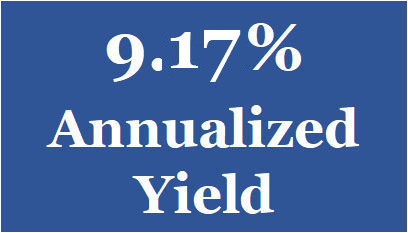 Fidelis Private Fund annualized yield paid to Limited Partners for the 3rd Quarter 2026. Click here for a summary of Fidelis’s annualized yield since inception.